
04 Sep Best Biometric Access Control for Data Centers 2026
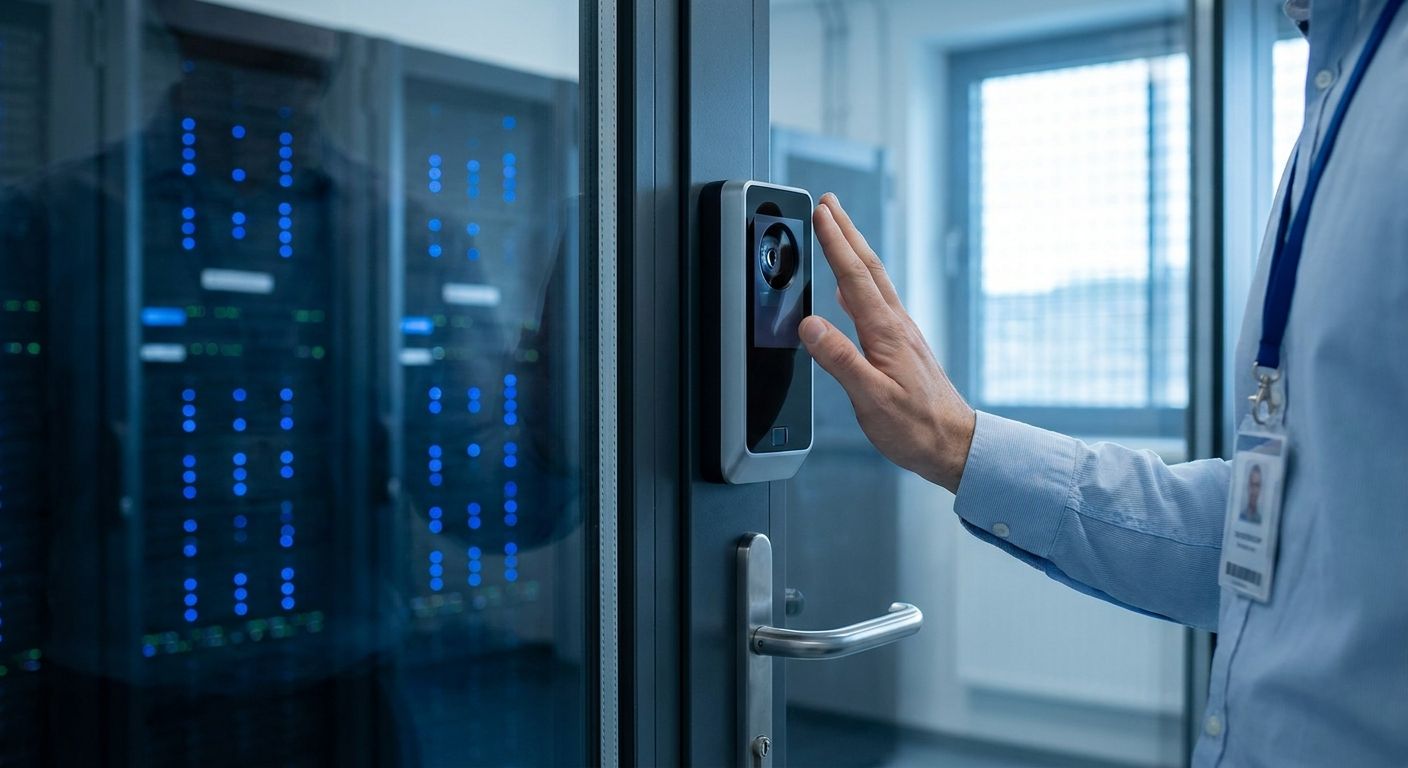
Data center break-ins rarely look like a jammed lock — they look like an unauthorized person standing next to a live rack with a stolen badge. The best biometric access control systems for data centers in 2026 pair a high-accuracy sensor with a second credential at every cage, machine room, and mechanical door, not just the front entrance. Multimodal biometric access control wins overall for full-facility security, iris recognition wins for cage-level doors, facial recognition wins for high-traffic lobbies and loading docks, palm vein recognition wins for cold-storage and gloved environments, and fingerprint readers win on cost for small single-tenant sites.
- Multimodal biometric access control is the best overall pick for data center security in 2026.
- Iris recognition wins for cage-level doors; fingerprint alone isn’t enough for a data hall.
- Facial recognition speeds up lobby and loading dock entry without anyone touching a reader.
- Palm vein recognition fits cold storage rooms and gloved environments better than fingerprint scanners.
- Pair any biometric access control system for data centers with cabling and network infrastructure built for it.
Why this matters
Card readers and PINs get shared, borrowed, or cloned. A biometric credential can't be handed to a coworker, which is why colocation operators and companies running a private data hall or server room inside an office building are moving past keycards for the doors that matter most.
The biometric sensor is only half the job. Door hardware, network cabling, and camera coverage around that sensor decide whether the system actually works when someone tries to force it. That's the case made in secure a server room with access control and cameras — the pattern holds across nearly every install: the door that gets skipped is the interior one, not the front entrance.
DBSI has installed access control and network infrastructure for New Jersey businesses for over 15 years, and in 2026 the biggest gap is still the same one: a badge reader on the lobby door and nothing stronger on the cage.
What makes the best biometric access control systems for data centers
- Accuracy at the specific door type — a false-reject rate that's fine for a lobby is too high for a cage door technicians open 40 times a day.
- Compatibility with existing cabling and PoE — most biometric readers run on Power over Ethernet, so the cabling behind the wall decides what's possible.
- Audit-trail depth — timestamped logs tied to a named employee, not a generic card number, for compliance review.
- Integration with cameras already on site — a biometric event should trigger a camera clip automatically, not sit in a separate log nobody checks.
- Failover behavior — what the door does when the network drops or the reader loses power.
- Enrollment and offboarding speed — how fast a contractor gets added on a Monday and removed on a Friday.
Biometric access control systems for data centers: at a glance
| System | Best for | Standout feature | Key limitation |
|---|---|---|---|
| Multimodal biometric access control | Overall data center security | Two or more factors on one door | More hardware and integration work |
| Iris recognition | Cage and machine room doors | Very low false-accept rate | Higher cost per door, harder retrofit |
| Facial recognition access control | Lobbies and loading docks | Touchless, high-throughput entry | Accuracy drops with masks or poor lighting |
| Fingerprint access control | Small sites on a tight budget | Lowest hardware cost, proven track record | Single factor, misreads dirty or worn prints |
| Palm vein recognition | Cold storage and gloved environments | Contactless, pattern can't be copied | Fewer vendors, longer parts lead time |
1. Multimodal biometric access control: best for full data center security
Multimodal systems combine two or more biometric factors — fingerprint plus facial recognition, or iris plus a PIN — so a single spoofed or damaged credential doesn't grant access on its own. For a data center in 2026, that layering matters most at the perimeter and at cage doors where a breach carries real cost.
Multimodal biometric access control pros:
- Highest resistance to spoofing and tailgating of any option on this list
- Redundant: if one sensor misreads a scarred fingerprint or a gloved hand, the second factor still works
- Combines multiple biometric logs into one audit trail for compliance reporting
- Scales down from building perimeter to individual rack cage
Multimodal biometric access control cons:
- More hardware and cabling per door than a single-factor system
- Enrollment takes longer per employee since two templates get captured
- Needs tighter coordination with the network cabling and IT support running behind it
Best for: data centers that need one standard applied across the whole facility, not just the front door.
Verdict: Buy — for perimeter and cage doors where a breach would be costly.
2. Iris recognition: best for cage and machine room doors
Iris recognition scans the eye's iris pattern with a camera and is one of the more accurate contactless biometric methods available, which is why it shows up most often on cage doors and machine rooms rather than main entrances.
Iris recognition pros:
- Very low false-accept rate compared to fingerprint or facial matching
- Contactless, so staff keep both hands on an equipment cart
- Works through most types of eyewear
Iris recognition cons:
- Camera hardware costs more per door than a fingerprint reader
- Positioning and lighting have to be right, which complicates retrofits into low-ceiling mechanical rooms
- Fewer installers are trained on it than on fingerprint or card systems
Best for: cage-level or machine room doors inside a larger facility, not building-wide entry.
Verdict: Buy — for the highest-value interior doors, skip it for the lobby.
3. Facial recognition access control: best for lobbies and loading docks
Facial recognition matches a live camera feed against enrolled templates and unlocks a door or turnstile without contact, which speeds up entry for staff and contractors moving carts through a lobby or loading dock.
Facial recognition access control pros:
- Fast throughput at high-traffic entries
- Touchless entry reduces wear on hardware
- Pairs with security camera systems already covering the entrance
Facial recognition access control cons:
- Accuracy can dip with masks, poor lighting, or extreme camera angles
- Raises employee privacy questions that need a written policy before rollout
- Works best as one factor of two, not the only lock on a data hall door
Best for: main entrances and loading docks where speed matters more than maximum security.
Verdict: Buy — for lobbies and docks; pair with a second factor at the cage.
4. Fingerprint access control: best for small sites on a budget
Fingerprint readers compare a scanned print to a stored template and remain the most established, lowest-cost biometric method on the market, which is why they still show up on the front door of smaller colocation suites.
Fingerprint access control pros:
- Lower hardware cost per door than iris or facial systems
- Long track record with broad vendor support
- Simple enrollment process for staff
Fingerprint access control cons:
- Readers misread dirty, wet, or worn prints
- Single-factor by default
- Requires physical contact, which some staff avoid
Best for: a small colocation site's front door or a single server closet.
Verdict: Hold — fine as one layer, not enough alone for the data hall.
5. Palm vein recognition: best for cold storage and gloved environments
Palm vein recognition reads the vein pattern under the skin of the palm. It's contactless and hard to spoof because the pattern isn't visible on the surface, which makes it a fit for facilities where gloves or hygiene rules make fingerprint and touch readers impractical.
Palm vein recognition pros:
- Fully contactless
- Internal vein pattern can't be lifted or photographed like a fingerprint
- Consistent accuracy in cold rooms and with gloved hands
Palm vein recognition cons:
- Fewer manufacturers support it, so parts and integration take longer to source
- Per-door hardware costs more than a fingerprint reader
- Staff need brief training on hand positioning
Best for: cold storage rooms, cleanroom-adjacent spaces, and any door where gloves are standard.
Verdict: Buy — where contactless matters but iris cameras won't fit the door geometry.
How we ranked these systems
DBSI's ranking comes down to the criteria above: accuracy at the door type in question, compatibility with the cabling and network already run to that door, how fast a system logs and audits entries, and what happens when power or network drops. Multimodal systems rank highest because they satisfy all four at once; single-factor fingerprint ranks lowest for anything beyond a small site because it fails the redundancy test.
Which biometric access control system should you choose?
For most data centers in 2026, the right answer isn't one system — it's a mix. Run multimodal biometric access control at the perimeter and every cage door, iris or palm vein at machine rooms and cold storage, and facial recognition at the lobby and loading dock where throughput matters more than maximum security. Fingerprint alone still has a place, but only on a single server closet or a small site with a tight budget.
DBSI installs and supports biometric access control systems for New Jersey businesses running data halls, colocation suites, and server rooms, and the work covered in how to choose an access control system for your business walks through the same decision points door by door. The system only performs as well as the cabling, cameras, and network behind it.
Plan your data center access control
Get a door-by-door assessment before you pick a biometric system.
FAQ
What’s the best biometric access control system for a data center in 2026?
Multimodal biometric access control, combining two or more factors on the same door, is the best overall choice for 2026 because it doesn’t fail if one sensor misreads or gets spoofed. Single-modal systems like fingerprint or facial recognition still work well for specific doors, just not as the only layer on a data hall.
Is iris recognition better than fingerprint for server rooms?
Iris recognition has a lower false-accept rate than fingerprint and works contactless, which makes it a better fit for cage and machine room doors. Fingerprint readers cost less per door, so they’re still common on lower-security interior doors.
How much does biometric access control cost for a data center?
Cost depends on door count, the biometric modality chosen, and whether existing cabling can support the readers. Get a door-by-door quote rather than pricing the system as one flat number.
Can biometric access control work with an existing security camera system?
Yes, most biometric readers integrate with the camera system already covering an entrance so a denied or unusual attempt triggers a recorded clip automatically. That integration matters more than the biometric sensor alone for a usable audit trail.
Do biometric readers work during a power or network outage?
That depends on the failover setting built into the install — some doors fail secure and lock down, others fail open for life-safety reasons. This needs to be decided per door before installation, not after an outage.
What’s the difference between single-factor and multimodal biometric access control?
Single-factor systems, like a standalone fingerprint reader, grant access on one match alone. Multimodal systems require two or more factors, such as a fingerprint plus a facial scan or a PIN, so a single compromised credential doesn’t open the door.
How long does it take to install biometric access control in an existing data center?
Timelines vary with door count and whether new cabling needs to be run to each reader. A single-door retrofit moves faster than a full multimodal rollout across a facility’s cages and machine rooms.
Is facial recognition accurate enough for data center security on its own?
Facial recognition alone works well for high-traffic lobbies and loading docks but isn’t the strongest single layer for a data hall because accuracy drops with masks or poor lighting. Pairing it with a second factor at higher-security doors closes that gap.
One last thing
Most data center operators plan biometric access control door by door and forget the cabling underneath it. A multimodal reader on PoE draws more from the switch and the run behind the wall than a basic keycard reader ever did, and retrofitting that cabling after the readers are mounted costs more than planning it up front in 2026. DBSI's installers see this gap most often on cage doors added after the original buildout, where the original cabling was never sized for a second reader.
Related guides
- Structured cabling for data centers and server rooms
- Best biometric access control systems for business
- Network cabling for data centers
Sorry, the comment form is closed at this time.