
15 Sep Commercial Security Camera Cost in 2026: What Sets It
There's no flat number for commercial security camera system cost in 2026 — quotes swing based on camera count, resolution, storage method, and how complicated the building is to wire. The number that actually matters is the one built around your floor plan, not a generic package price pulled from a competitor's website.
- Commercial security camera system cost in 2026 depends on camera count, resolution, storage, and installation complexity, not a flat rate.
- PoE cameras usually cut cabling costs compared to older analog wired setups for small business offices.
- Cloud storage adds a recurring subscription; on-site NVR storage is upfront hardware plus ongoing maintenance.
- DBSI sizes commercial camera systems by walking the building first instead of quoting a generic package.
- Get a site walkthrough before budgeting — camera counts for similarly sized buildings vary a lot by layout and industry.
Why this matters
Business owners searching for commercial security camera system cost in 2026 usually have one of two goals: budgeting for a new build-out, or replacing a system that's already failed them. Either way, a vague online estimate doesn't help much when you're trying to get sign-off from a landlord, an insurance carrier, or a business partner.
The factors that move the price are the same ones that determine whether the system actually does its job — entry points covered, footage retention length, and whether the cameras integrate with door access control or an alarm panel. Skipping that planning step to save money upfront is how businesses end up paying twice: once for a cheap system, and again when it gets replaced two years later. Choosing commercial security cameras the right way from the start avoids that.
How much does a commercial security camera system cost?
There isn't a single industry-wide price because the inputs vary too much building to building. A single-entrance retail storefront needs a fraction of the hardware a multi-floor warehouse or a multi-tenant office building requires, and resolution, storage, and monitoring choices stack on top of that.
What drives the final number, in rough order of impact:
| Cost driver | Why it matters | Impact on total cost |
|---|---|---|
| Number of cameras | Entry points, blind spots, parking areas all add units | High |
| Camera resolution | 4K cameras capture more detail than 1080p but cost more per unit | Medium |
| Storage method | Cloud subscriptions vs. on-site NVR/DVR hardware | Medium-High |
| Cabling and PoE infrastructure | Existing cabling reduces labor; new construction adds it | Medium |
| Installation complexity | Ceiling height, distance from the network rack, existing walls | Medium |
| Monitoring and integrations | Linking cameras to access control or alarm systems adds setup time | Low-Medium |
The honest starting point for a real number is a site walkthrough, not a web calculator. Planning camera placement before requesting quotes gives you a camera count you can actually compare across vendors.
What drives commercial security camera costs in 2026
- Camera count and coverage — every entry, loading dock, register, and parking area you want covered adds a unit and a cable run.
- Resolution and lens type — higher resolution cameras (4K vs. 1080p) hold up better in court or insurance disputes but cost more per camera.
- Storage method — cloud storage means a recurring subscription; on-site NVR or DVR storage means upfront hardware and periodic drive replacement.
- Cabling infrastructure — PoE security cameras run power and data over one cable, which usually costs less to install than older systems that need separate power runs.
- Installation complexity — existing buildings with finished ceilings, long cable runs, or limited network closet space take more labor than new construction.
- Monitoring and integrations — linking cameras to door access control, motion-triggered alerts, or a guard service adds setup time on top of the hardware.
A commercial security camera system priced without a site walkthrough is a guess, not a quote — treat any number you get online as a starting point for a conversation, not a budget line.
Is cloud video storage more expensive than on-site storage?
Cloud storage carries a recurring subscription that scales with camera count and how long you retain footage, while on-site NVR or DVR storage is a one-time hardware purchase with periodic maintenance and eventual drive replacement. Businesses with compliance-driven retention requirements often lean cloud for offsite backup even when it costs more monthly, because it protects footage if the on-site hardware is stolen or damaged. Storing and managing footage for compliance walks through retention requirements by use case.
How many cameras does a small business need?
Camera count depends on entry points, blind spots, and square footage, not a fixed ratio per employee or per door. A single-entrance office and a multi-dock warehouse of the same square footage will need very different camera counts because the risk points aren't the same.
Is professional installation worth the added cost over DIY?
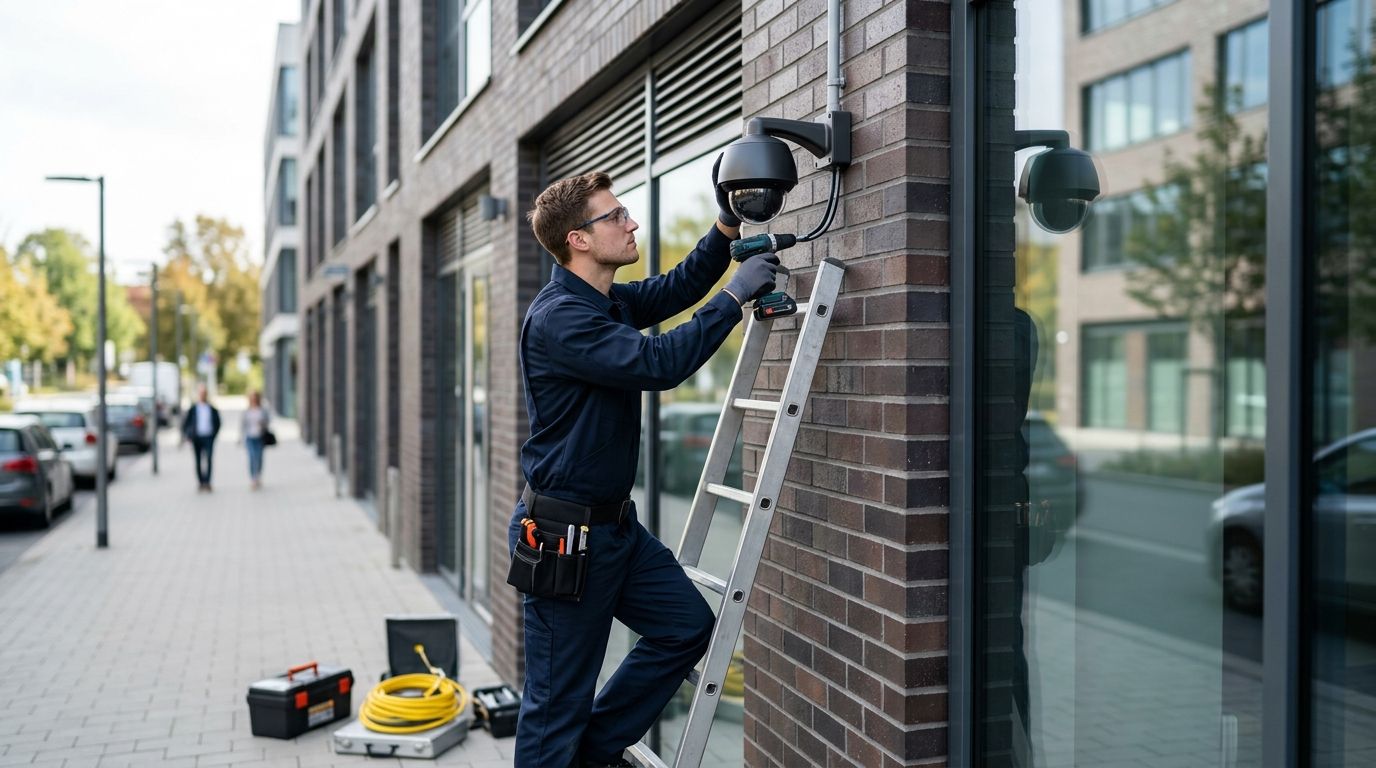
Professional installation is worth it once you have more than a couple of cameras or any cabling to run through walls or ceilings, because a poorly placed camera or a bad cable run is expensive to fix later. DBSI's installers plan cable routes and camera angles as part of the same visit, which avoids the redo costs that come with a rushed DIY setup.
Get a camera system sized to your building
A walkthrough beats a web estimate every time.
FAQ
How much does a commercial security camera system cost in 2026?
There’s no single price — commercial security camera system cost in 2026 depends on camera count, resolution, storage method, and installation complexity. A site walkthrough is the only way to get a number that reflects your building.
Are PoE cameras cheaper to install than analog cameras?
PoE cameras run power and data over a single cable, which typically reduces cabling labor compared to older analog systems that need separate power runs. The camera hardware itself may cost more, but installation is usually simpler.
Does cloud storage cost more than on-site storage long term?
Cloud storage is a recurring subscription that scales with camera count and retention length, while on-site NVR storage is upfront hardware with periodic maintenance. Which costs more depends on how long you retain footage and how many cameras you run.
What’s the biggest hidden cost in a commercial camera system?
Cabling and installation labor is the cost most business owners underestimate, especially in existing buildings with finished ceilings or long runs to the network closet. It’s also the line item that varies most from quote to quote.
Do I need a separate monitoring service?
Not always — many businesses review footage themselves after an incident rather than paying for live monitoring. Whether you need active monitoring depends on your risk level and whether cameras are tied to an alarm system.
Can security cameras integrate with door access control?
Yes, cameras can be linked to access control systems so a badge swipe or forced-door alert triggers a camera snapshot or clip. This adds setup time and cost but gives you a photo log tied to every entry event.
Is 4K resolution worth the extra cost over 1080p?
4K resolution captures more usable detail for identifying faces or license plates, which matters most at entrances and parking areas. For general interior coverage, 1080p is often enough and costs less per camera.
How long does commercial camera installation take?
Installation time depends on camera count and whether new cabling is needed, with existing-building installs generally taking longer than new construction because of finished walls and ceilings. A site walkthrough gives a realistic timeline before work starts.
One last thing
The businesses that pay the least over time aren't the ones that bought the cheapest system in 2026 — they're the ones that planned camera placement and cabling once, correctly, instead of adding cameras piecemeal every time a blind spot causes a problem. If you're already running new network cabling for an office move or build-out, bundling the camera cabling into that same job saves you from opening ceilings twice.
DBSI has handled commercial security camera installs and the network cabling behind them for over 15 years, which is usually why business owners call before signing a lease on a new location instead of after. A camera system that's planned alongside your network, not bolted on afterward, is the one that's actually built to keep your business protected around the clock.
Related guides
- Installing commercial security cameras in an existing building
- Storing and managing security camera footage for compliance
Sorry, the comment form is closed at this time.