

18 Sep Office Phone Line Cost: Lowest-Cost Route in 2026
The cost to add a new phone line to an office in 2026 depends on whether you can extend an existing VoIP system or need cabling, hardware, and on-site installation. An active network connection and available system capacity make the job simpler; missing cabling or a full legacy phone system makes it more involved. The quote should separate one-time installation work from recurring service charges.
- Extending an existing VoIP system is the lowest-cost way to add an office phone line in 2026.
- New cabling, phone hardware, on-site labor, and recurring licensing increase the total cost.
- An analog line can require carrier provisioning and capacity upgrades on the existing phone system.
- DBSI is best for Fairfield-area businesses that need phone installation and network cabling from one local provider.
Why this matters
A request for one new line can describe several different jobs. You might need a new telephone number, an extension for another employee, a physical phone at a new desk, or a cable run connecting that desk to the network. Those requests do not require the same equipment or labor.
The first question is whether your current system supports another user. If it does, adding a line can be limited to account provisioning and device setup. The VoIP phone system cost per user becomes the main recurring consideration in that scenario.
The second question is whether the desk has a working network connection. A phone cannot use office VoIP service reliably without suitable network access, so the condition of the cabling matters as much as the telephone service.
How much does it cost to add a new phone line to an office?
There is no supported flat price in the available information. The correct 2026 estimate depends on the system type, existing cabling, required phone hardware, provider licensing, and installation work. A site-specific quote is necessary when a technician must inspect the network closet, cable route, or legacy phone equipment.
| Office phone line scenario | Work normally involved | Cost position | Main drawback |
|---|---|---|---|
| VoIP extension with active cabling | Add the user, assign the extension or number, and configure the device | Lowest | Adds a recurring license or service charge |
| VoIP extension without active cabling | Complete the system setup and install or activate a network connection | Higher | Requires access to the desk area and network closet |
| Softphone for an existing computer | Provision the user and configure calling software | Lower hardware requirement | Depends on the computer, headset, and network connection |
| Analog line on a legacy system | Coordinate carrier service and connect the line to the existing system | Usually more involved | Carrier lead time and system capacity can delay the job |
| Line added during an office build-out | Coordinate phones, cabling, switching, and workstation locations | Project-based | Late layout changes can create rework |
The lowest-cost route in 2026 is an added VoIP extension using an existing network connection and supported device. The highest-cost route is usually the one that introduces construction access, new cable pathways, carrier work, or an upgrade to a phone system that has reached capacity.
Existing VoIP system: the simplest addition
Adding an extension to an existing cloud or VoIP phone system is the cleanest scenario. The provider creates the user, assigns the extension or telephone number, applies the correct calling settings, and connects the device. If the desk already has a working network port, no new cable run is needed.
The advantages are straightforward:
- The existing phone system stays in place.
- The new user can follow the same dialing and voicemail setup as the rest of the office.
- Provisioning can be completed without ordering another analog carrier line.
- A compatible softphone can remove the need for another desk phone.
The disadvantage is the recurring charge attached to the new user or service. A low installation bill does not mean the line has no continuing cost. Ask the provider to identify every recurring item separately in the 2026 proposal.
VoIP line with new cabling: a combined phone and network job
A new employee may have a desk but no active network jack. In that case, the phone line addition includes a cabling task: planning the route, running cable from the communications area, terminating the connection, labeling it, and testing it before the phone is configured.
This work becomes more complex when the cable route crosses finished ceilings, multiple rooms, occupied work areas, or building-managed spaces. The phone setup itself can remain simple while physical access drives most of the labor.
DBSI provides business telephone systems and network cabling for small and mid-sized businesses near Fairfield, New Jersey. That combination is useful when one request includes both the extension and the physical connection needed to support it. Businesses outside the service area should confirm coverage before planning the installation.
The related guide to network cabling for VoIP phone systems explains why phone quality depends on the network underneath it, not only the calling provider.
Softphone addition: less hardware, more device dependence
A softphone lets an employee place and receive business calls through a computer or supported mobile device. This can remove the desk phone from the project, but it does not remove the need for a user account, telephone number or extension, working audio equipment, and stable network access.
Best for: remote staff, hybrid employees, and office users who already work with a headset throughout the day.
Pros:
- No additional desk phone is required.
- The employee can work from more than one approved location.
- Provisioning can be faster when the account and device are ready.
Cons:
- Call quality depends on the computer, headset, and network.
- Device updates and local settings can affect calling.
- Some employees prefer physical buttons and a dedicated handset.
A softphone is not automatically the right answer for reception desks, shared spaces, or employees who need a dedicated physical device. Match the endpoint to the way the employee handles calls.
Analog line on a legacy system: more dependencies
An office using traditional analog service or an older private branch exchange has more moving parts. The carrier may need to activate service, the building connection may need attention, and the phone system must have capacity for another line or extension.
A full system can require additional hardware before it accepts another connection. Older equipment can also make programming and replacement parts harder to coordinate. These dependencies are why businesses evaluating several additions often compare expansion against a move to VoIP in 2026.
Best for: an office that must preserve a specific existing analog function and has confirmed system capacity.
Pros:
- Keeps the established legacy system in place.
- Avoids an immediate office-wide migration.
Cons:
- Carrier scheduling can control the timeline.
- Hardware capacity can block the addition.
- Expanding one line at a time can preserve an aging system without solving its larger limitations.
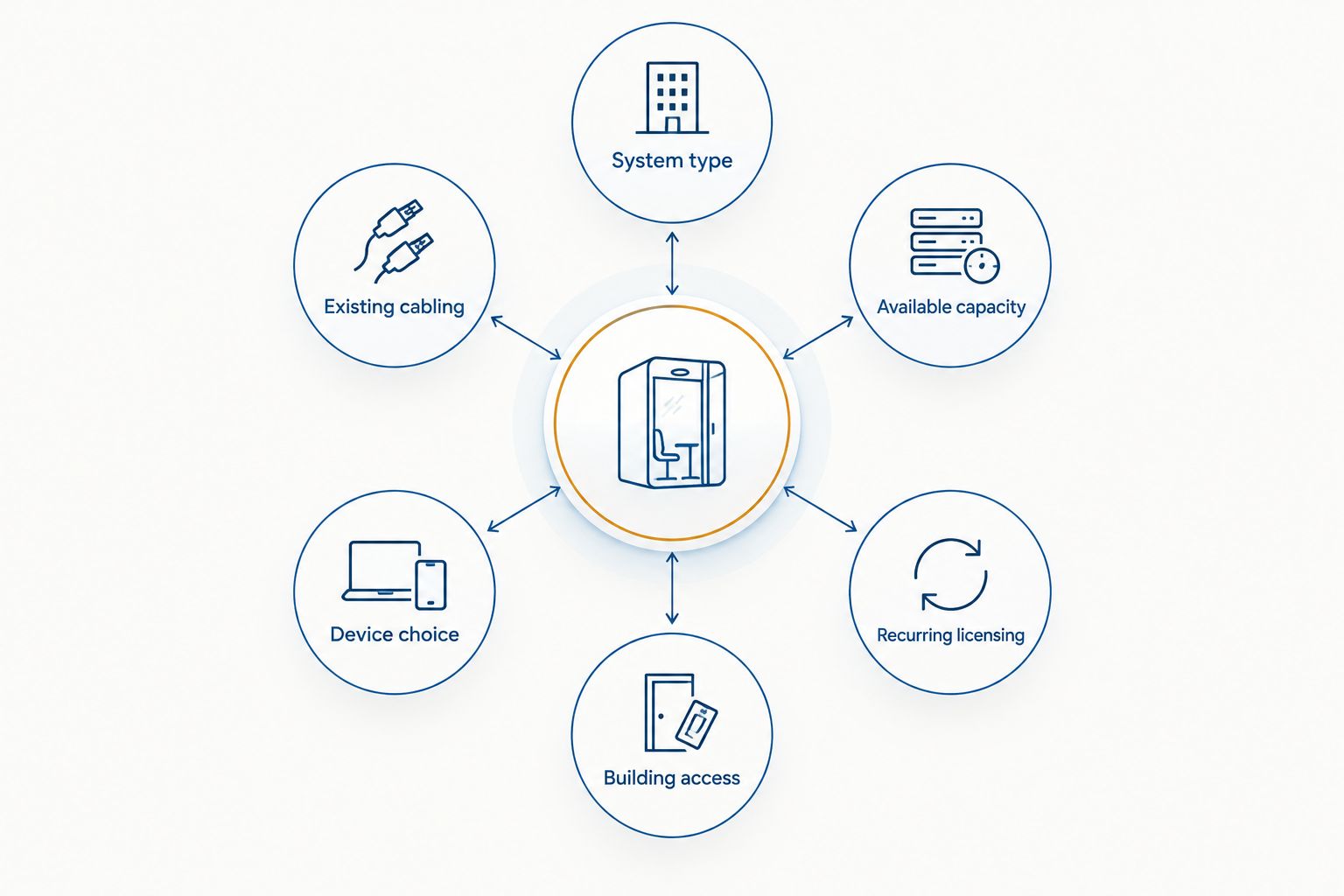
Why the cost varies
- System type: Cloud VoIP, on-premise VoIP, and analog systems require different provisioning and equipment.
- Available capacity: The phone platform, PBX, switch, or network cabinet must support the added connection.
- Existing cabling: A tested and active network port avoids a new cable installation.
- Device choice: A desk phone adds hardware and configuration; a softphone relies on an existing computer or mobile device.
- Recurring licensing: User licenses, calling service, telephone numbers, and optional features can create continuing charges.
- Building access: Finished ceilings, restricted communications rooms, and landlord rules can add coordination and labor.
What should a phone-line quote include?
A clear quote separates the work into categories instead of presenting one unexplained total. That makes it easier to compare providers and identify charges that continue after installation.
Ask for these items:
- Telephone number or extension provisioning
- User or service licensing
- Desk phone or other endpoint hardware
- Network cable installation, if required
- On-site device configuration
- Voicemail and call-routing setup
- Testing of incoming, outgoing, and internal calls
- Taxes, carrier charges, or other recurring items identified by the provider
Also ask what is excluded. Wall repair, electrical work, landlord access, after-hours installation, and network upgrades should not appear as surprises after approval. The provider should explain whether each item is required for your specific office rather than treating every possibility as part of the project.
Plan your phone line addition
DBSI can review the phone system, cabling, and device requirements for your Fairfield-area office.
How can you keep the project controlled?
Start by defining what the employee actually needs. A direct telephone number, internal extension, voicemail box, call queue membership, and physical desk phone are separate requirements. Ordering all of them by default can add unnecessary work.
Next, inspect the workstation location before scheduling the phone installation. Confirm that the network jack is active, labeled, and connected to the correct network equipment. If the office is adding several desks, plan them together so the cabling and phone configuration can be handled as one coordinated project.
Finally, document the recurring service impact. The 2026 installation amount is only part of the decision because user licensing continues after the technician leaves. Compare the new monthly obligation with the value of the added line and with any unused licenses already on the account.
Does adding a phone line require new cabling?
Adding a phone line requires new cabling only when the desk lacks a suitable active connection or the existing connection fails testing. A working network port can support a VoIP phone without another cable run, while an analog installation follows the requirements of the legacy system and carrier connection.
Is VoIP better than analog for one extra office line?
VoIP is the better expansion path in 2026 when the office already has a supported VoIP platform and reliable network connectivity. Analog service remains relevant for specific existing functions, but carrier coordination and legacy system capacity make a routine addition less flexible.
Can an office add a phone line without a technician visit?
An office can add a VoIP user without a technician visit when the system supports remote provisioning, the network connection already works, and the employee can configure the approved device. New cabling, legacy PBX work, or network troubleshooting requires on-site service.
DBSI's fit for an office phone-line project
DBSI is best for small and mid-sized businesses near Fairfield, New Jersey that want business phone installation and network cabling handled by one local office technology provider. The company also supports IT and network services, which matters when a new line exposes a connection or switching problem.
DBSI has over 15 years of professional experience according to the supplied brand information. The practical advantage is a single provider covering the phone system and its network connection. The limitation is geographic: a business outside the Fairfield-area market needs to confirm whether DBSI serves its location.
For a larger expansion, treat the request as a phone-system plan rather than a series of isolated line additions. That approach identifies capacity, cabling, licensing, and support requirements before the office commits to new devices.
FAQ
How much does it cost to add a new phone line to an office in 2026?
The cost depends on the existing phone system, available network cabling, device choice, labor, and recurring provider licensing. Extending a supported VoIP system through an active network port is the lowest-cost scenario.
What’s the cheapest way to add an office phone line?
The cheapest route is to add a VoIP extension using existing cabling and an approved device already available to the employee. Confirm the recurring user license before approving the addition.
Do I need a new desk phone for another office line?
You do not need a new desk phone if the phone platform supports a softphone and the employee has an appropriate computer or mobile device. A user license, number or extension, and reliable network connection are still required.
Does a VoIP phone need its own cable?
A VoIP phone needs network connectivity, but it does not always need a new cable run. An existing active network port can support the phone when the network and phone design allow it.
Can I add another line to an old office phone system?
You can add another line if the legacy system has capacity and the carrier can provide the required service. A full PBX or unavailable hardware can turn the request into a system upgrade.
How long does adding an office phone line take?
The timeline depends on whether the work involves remote VoIP provisioning, new cabling, hardware delivery, or carrier activation. Existing VoIP service and active cabling create the shortest path.
What recurring costs come with a new office phone line?
Recurring costs can include the user license, calling service, telephone number, and optional phone features. The provider should list those charges separately from installation and hardware.
Should I add one line or upgrade the whole phone system?
Add one line when the current system has capacity and still meets the office’s needs. Review a broader upgrade when the system is full, unreliable, difficult to support, or facing several planned additions.
One last thing
Before ordering anything in 2026, check for an unused user license and test the network jack at the new desk. Those two checks reveal whether the request is a quick extension setup or a combined phone-and-cabling project. DBSI can address both parts for qualifying Fairfield-area offices, but the scope should still be written clearly before work begins.
Related guides
- How to set up a business phone system in a new office
- How to budget for a new business phone system
- How to reduce phone system downtime
Sorry, the comment form is closed at this time.