
06 Sep Best Wireless Access Points for Malls & Retail 2026
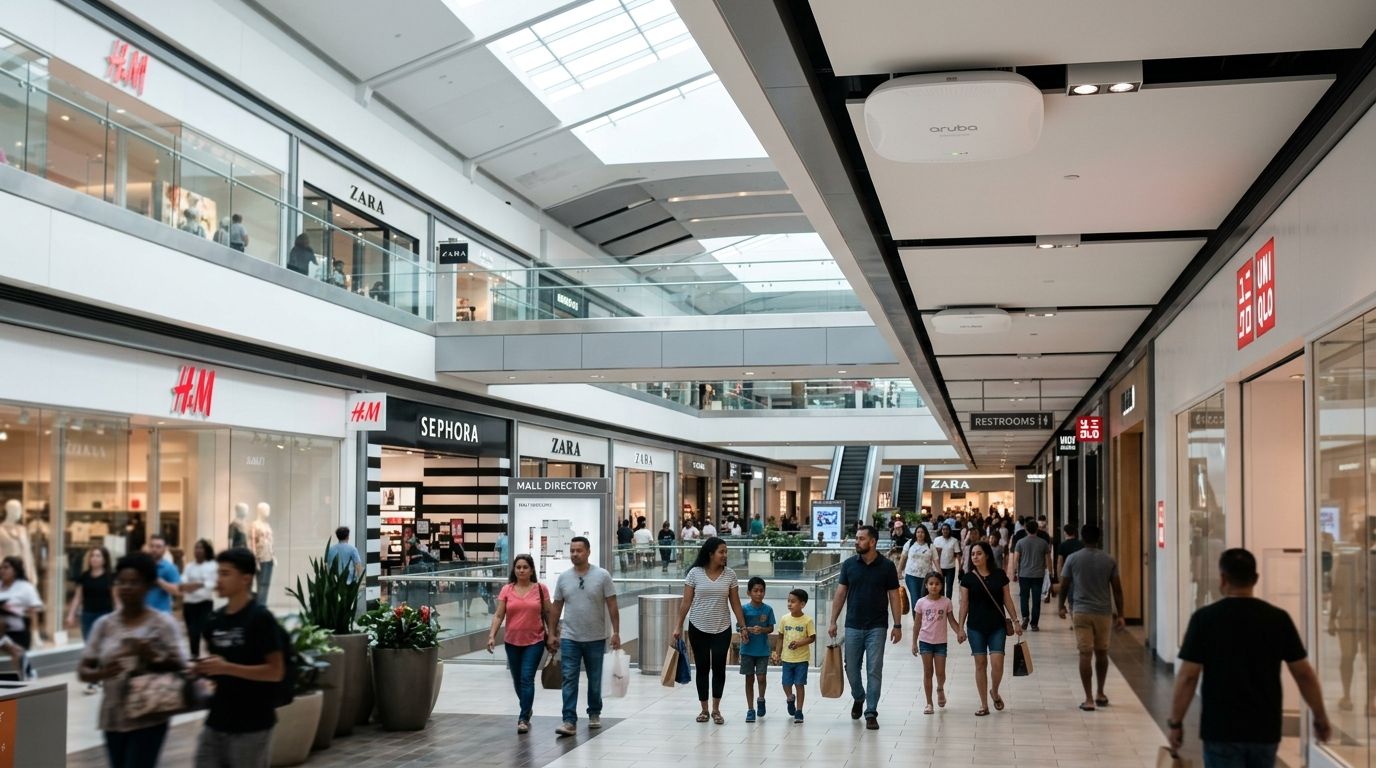
Shopping malls and retail centers burn through wireless access points faster than a typical office because foot traffic, steel racking, and glass storefronts fight the signal at every turn. This guide ranks the wireless access point systems that hold up in that environment in 2026 and tells you which one fits your property.
- Cisco Meraki MR series is the best overall wireless access point system for shopping malls and retail centers in 2026.
- Cambium Networks holds up best in high-density common areas like food courts and atriums.
- Ubiquiti UniFi is the best budget wireless access point system for a single-location retail center.
- Aruba Instant On adds built-in guest wifi analytics for tracking shopper foot traffic.
- Ruckus BeamFlex antennas push signal through steel racks and glass storefronts better than fixed-antenna access points.
Why this matters
A mall or retail center isn't a home network with more rooms. You've got dozens of tenants pulling from the same wireless backbone, POS terminals that can't drop a transaction mid-swipe, and security cameras competing for the same bandwidth as customer phones. Pick the wrong access point system and you get dead zones near the anchor stores, slow checkout during Saturday rush, and a help desk full of tenant complaints by February.
DBSI installs and supports business wifi systems for shopping malls and retail centers across Fairfield, NJ and the surrounding market, and the pattern is consistent: properties that plan access point placement around actual foot traffic and construction materials outperform properties that just add more hardware. The five systems below cover the range from single-tenant strip centers to multi-level enclosed malls.
What makes the best wireless access point system for a retail center
- Client density handling — how many concurrent phones, tablets, and POS devices one access point can serve without throughput collapsing during peak hours
- Centralized management across locations — a single dashboard for a retail chain running the same wireless access point system in 12 stores instead of 12 separate logins
- Guest and operational network separation — shopper wifi stays isolated from POS, inventory scanners, and back-office traffic
- Interference resistance — performance holds up against steel shelving, glass storefronts, and concrete structural columns
- PoE and cabling compatibility — the access points need to match the network cabling in the retail buildout already in the walls or planned for it
- Roaming across large square footage — a shopper's phone should hand off between access points without dropping the connection while walking from one end of the mall to the other
At a glance
| System | Best for | Standout feature | Key limitation |
|---|---|---|---|
| Cisco Meraki MR series | Multi-location retail chains | Cloud dashboard manages every store from one login | Ongoing license required to keep cloud management active |
| Cambium Networks | High-density common areas | Handles heavy concurrent client loads in food courts and atriums | Less common in single-store retail deployments |
| Ubiquiti UniFi | Single-location retail centers on a budget | Full-featured controller software at a lower hardware cost | No built-in vendor support line — relies on the installer or IT provider |
| Aruba Instant On | Guest wifi analytics and foot traffic tracking | Built-in presence detection and engagement reporting | Advanced analytics features lag behind Aruba's enterprise-tier product line |
| Ruckus (CommScope) R-series | Buildings with heavy interference from steel and glass | BeamFlex adaptive antenna technology adjusts signal path in real time | Setup and channel planning benefit from an installer who knows the platform |
1. Cisco Meraki MR series: best wireless access point system for multi-location retail chains
Meraki's MR line runs on a cloud dashboard that shows every access point across every store from one screen, which is the whole reason retail chains standardize on it. A regional manager can check signal health at a location three states away without a site visit, and firmware updates push out to the entire chain at once instead of store by store.
Cisco Meraki pros:
- Single dashboard manages access points across unlimited retail locations
- Guest network splits cleanly from POS and inventory traffic
- Client density handling holds up during holiday-week foot traffic
- Remote troubleshooting cuts down on truck rolls to individual stores
Cisco Meraki cons:
- Requires an active license to keep cloud management running
- Overkill for a single small storefront that doesn't need multi-site management
Best for: retail chains running the same wireless access point system across five or more locations.
Verdict: Buy if you're standardizing wifi across multiple retail locations and want one dashboard for all of them.
2. Cambium Networks: best wireless access point system for high-density common areas
Cambium's access points are built for the part of a mall that a lot of systems choke on: the food court, the atrium, the area outside the movie theater where 200 phones are connected at once. The hardware is designed around concurrent client capacity first, which matters more in common areas than in individual storefronts.
Cambium Networks pros:
- Strong concurrent client handling in packed common areas
- Reliable performance in large open spaces with high ceilings
- Works well alongside existing network switches in a retail store network
Cambium Networks cons:
- Less common than Meraki or Ubiquiti in single-store retail settings, so support familiarity varies by installer
- Management interface has a steeper learning curve for a property team without dedicated IT staff
Best for: mall common areas, food courts, and atriums with heavy concurrent phone traffic.
Verdict: Buy for the high-traffic shared spaces in an enclosed mall; pair it with a different system for individual tenant spaces if needed.
3. Ubiquiti UniFi: best budget wireless access point system for a single retail center
UniFi gives a single-location retail center enterprise-style controller software — VLANs, guest portals, usage reporting — without the per-store licensing model that chain-focused platforms use. For a strip center or standalone retail building, that's often the more practical fit.
Ubiquiti UniFi pros:
- Controller software includes guest portal and VLAN segmentation out of the box
- No recurring per-access-point license fee
- Good fit for a single building or small strip center
Ubiquiti UniFi cons:
- No dedicated vendor support line — you're relying on your installer or IT provider for troubleshooting
- Multi-location management is less streamlined than Meraki's cloud dashboard
Best for: a single-location retail center or small strip mall that wants full network control without ongoing licensing costs.
Verdict: Buy if you're outfitting one building and want to avoid recurring per-device fees.
4. Aruba Instant On: best wireless access point system for guest wifi analytics
Aruba's Instant On line targets properties that want more than connectivity — they want to know how long a shopper lingered near an entrance or which day of the week draws the most foot traffic. The presence detection and engagement reporting built into the platform give property management something to hand to tenants during lease renewals.
Aruba Instant On pros:
- Built-in presence detection and foot traffic reporting
- Simple setup through a mobile app, no dedicated controller hardware required
- Guest network isolates cleanly from operational traffic
Aruba Instant On cons:
- Analytics features are lighter than Aruba's enterprise-tier product line
- Best suited to properties that actually plan to use the reporting, not just connectivity
Best for: property managers who want shopper foot traffic data alongside wifi coverage.
Verdict: Hold — solid if analytics matter to your leasing strategy, otherwise a simpler system covers the same square footage for less complexity.
5. Ruckus (CommScope) R-series: best wireless access point system for buildings with heavy interference
Older retail centers and enclosed malls built with steel structural framing and floor-to-ceiling glass storefronts chew up wireless signal that a standard fixed-antenna access point can't compensate for. Ruckus's BeamFlex technology adjusts the antenna pattern in real time to route around obstructions, which is why it shows up so often in renovated or older retail buildings.
Ruckus pros:
- BeamFlex adaptive antennas adjust signal path around steel and glass in real time
- Performs well in older retail buildings with dense structural interference
- Handles high client density in enclosed common areas
Ruckus cons:
- Channel planning and setup benefit from an installer familiar with the platform
- Not the first choice for a simple, low-interference single-store deployment
Best for: older or renovated retail buildings with heavy steel and glass construction blocking signal.
Verdict: Buy for buildings where a standard access point already struggles to reach the back of the store.
How this ranking was built
Each system above is ranked against the six criteria listed earlier: client density handling, centralized management, network segmentation, interference resistance, cabling compatibility, and roaming across square footage. No two systems compete for the same use case — a food-court deployment and a single strip-center storefront have different requirements, and the ranking reflects that instead of forcing every platform into one leaderboard slot.
“If an access point can’t tell a shopper’s phone from the store’s inventory scanner, the retail team pays for it in dropped transactions.”
Which wireless access point system should you choose?
For a retail chain standardizing wifi across multiple stores in 2026, Cisco Meraki is the default pick — the cloud dashboard alone justifies the license cost once you're past three or four locations. A single-location retail center on a tighter budget does better with Ubiquiti UniFi. An enclosed mall with a busy food court needs Cambium Networks in the common areas, and an older building fighting steel and glass interference needs Ruckus in the mix regardless of which system covers the storefronts.
Whichever platform you land on, the access points are only as good as the cabling and switch infrastructure feeding them. A business wifi installation that skips proper PoE planning ends up with the same dead zones a bad access point causes on its own.
Get a mall wifi site survey
DBSI plans access point placement around your building’s traffic and construction.
FAQ
What’s the best wireless access point system for a shopping mall in 2026?
Cisco Meraki is the best overall pick for multi-location retail chains in 2026 because of its cloud dashboard, but a single-location retail center often does better with Ubiquiti UniFi to avoid recurring license costs.
Is Cisco Meraki better than Ubiquiti UniFi for retail wifi?
Meraki wins for chains managing wifi across multiple store locations from one dashboard. UniFi wins for a single building where recurring per-device licensing isn’t worth the cost.
How many access points does a shopping mall need?
It depends on square footage, ceiling height, and construction materials — a food court with high concurrent client loads needs denser coverage than a row of small storefronts. A site survey is the only accurate way to size it.
Can one wifi system cover multiple retail store locations?
Yes — platforms like Cisco Meraki are built specifically for managing access points across many locations from a single cloud dashboard, which is why retail chains standardize on it.
Do access points interfere with security cameras or POS systems?
They can if the network isn’t segmented properly. Guest wifi, POS traffic, and camera feeds should sit on separate VLANs so shopper devices don’t compete with operational systems for bandwidth.
How much does mall wifi installation cost in 2026?
Cost depends on square footage, access point count, and how much new cabling the building needs — get a site survey for an exact figure rather than relying on a generic per-store estimate.
What’s the difference between guest wifi and operational wifi in a mall?
Guest wifi is the network shoppers connect to on their phones, while operational wifi carries POS transactions, inventory scanners, and security systems. Keeping them on separate network segments protects both performance and security.
One last thing
The access point brand matters less than most property managers assume — the placement plan matters more. A Cisco Meraki deployment with access points hung in the wrong spots underperforms a Ubiquiti UniFi system that was mapped against the actual floor plan, foot traffic patterns, and construction materials before installation day.
Related guides
- Best business wifi systems for shopping malls and retail centers
- Network cabling for retail store buildouts
- Best security camera systems for shopping malls and retail centers
- How to reduce wifi dead zones in a large office
- Best network switches for retail store networks
Sorry, the comment form is closed at this time.