
20 Sep Is Switching to VoIP Worth It for Small Business 2026?
Switching to VoIP is worth it for most small businesses in 2026 if your team makes or takes more than a handful of calls a day and your internet connection is stable enough to carry voice traffic. The trade-off nobody mentions upfront: a VoIP phone system is only as reliable as the network behind it, so the real cost of switching includes fixing weak Wi-Fi, undersized switches, or aging cabling before the first call ever routes.
- VoIP is worth it for small businesses in 2026 when call volume, remote staff, or multi-location growth outpace what a landline system supports.
- The catch: VoIP call quality depends entirely on your internet connection and internal network, not the phone itself.
- DBSI installs and supports VoIP phone systems and the network cabling behind them for small and mid-sized businesses in Fairfield, NJ.
- Landline PBX systems still make sense for single-location offices with fixed staff and no plans to add lines or remote workers.
Why this matters
A phone system decision made in 2026 gets locked in for years, not months. Businesses that switch to a VoIP phone system without checking their network first end up with dropped calls, jittery audio, and a support ticket queue that grows every week the underlying cabling or Wi-Fi stays untouched.
The opposite mistake also happens: businesses stick with an aging landline or on-premise PBX out of habit, and pay for hardware maintenance, per-line carrier fees, and zero remote-work flexibility while their VoIP-equipped competitors add lines and staff without touching a phone closet.
Is switching to VoIP worth it for a small business?
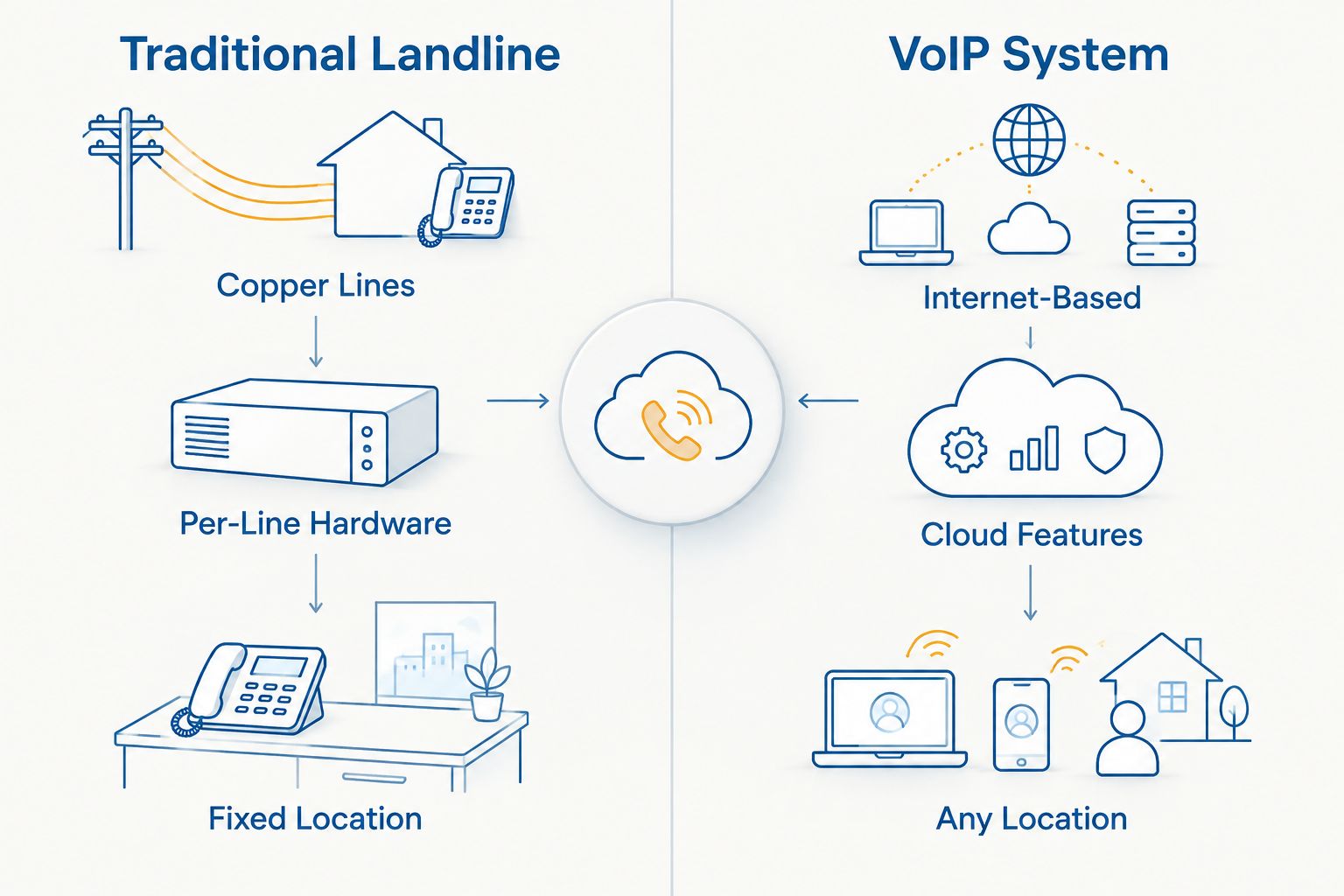
The answer depends on three things: how many employees work outside a single office, how much you're currently paying to add or move phone lines, and whether your current internet connection can carry voice traffic without your network team's help. Here's how the two systems stack up on the factors that actually matter in 2026.
| Factor | Traditional Landline / PBX | VoIP Phone System |
|---|---|---|
| Adding a new line | Requires a technician visit and new wiring | Added in software, no new copper run |
| Remote/hybrid staff | Not supported without extra hardware | Works from any internet connection |
| Multi-location calling | Separate systems per site | One system across locations |
| Power/internet outage | Landline keeps working on copper | Down unless you have internet failover |
| Integrations (Teams, Slack, CRM) | Rare or impossible | Standard on most platforms |
| Network dependency | None | High — depends on cabling and bandwidth |
Verdict: VoIP wins for growing or hybrid small businesses; a landline still has a place for single-site offices that never plan to add staff or locations.
Why the switch pays off for most small businesses
The factors that push a small business toward VoIP in 2026 are consistent across industries:
- Remote or hybrid staff — a VoIP extension follows an employee's laptop or headset, a landline extension does not.
- Multiple office locations — one VoIP system can route calls between sites without separate PBX hardware at each address.
- Frequent staff changes — adding or removing a line is a software change, not a technician dispatch.
- Integration needs — VoIP systems connect to tools like Microsoft Teams, Slack, and CRM software; copper landlines don't.
- Growth plans for 2026 and beyond — VoIP scales by adding a license, not by running new copper to a new desk.
- Current carrier costs — businesses paying separately for lines, long distance, and hardware maintenance on a legacy PBX often find VoIP consolidates those into one bill.
What VoIP switch actually requires behind the wall
A VoIP phone system doesn't run on the phone itself — it runs on the network. Before switching, check these three things:
- Bandwidth headroom. Voice traffic is lightweight per call, but a dozen simultaneous calls on a connection already maxed out by video and file transfers will stutter.
- Cabling condition. Older Cat5 runs or a network closet wired for a handful of desktop computers may not have enough clean drops for phones, access points, and cameras on the same switch. Network cabling built for VoIP phone systems addresses this before the phones go live, not after.
- Power over Ethernet (PoE) capacity. Most VoIP desk phones draw power from the network switch rather than a wall outlet — a switch without enough PoE ports or wattage stalls a rollout mid-install.
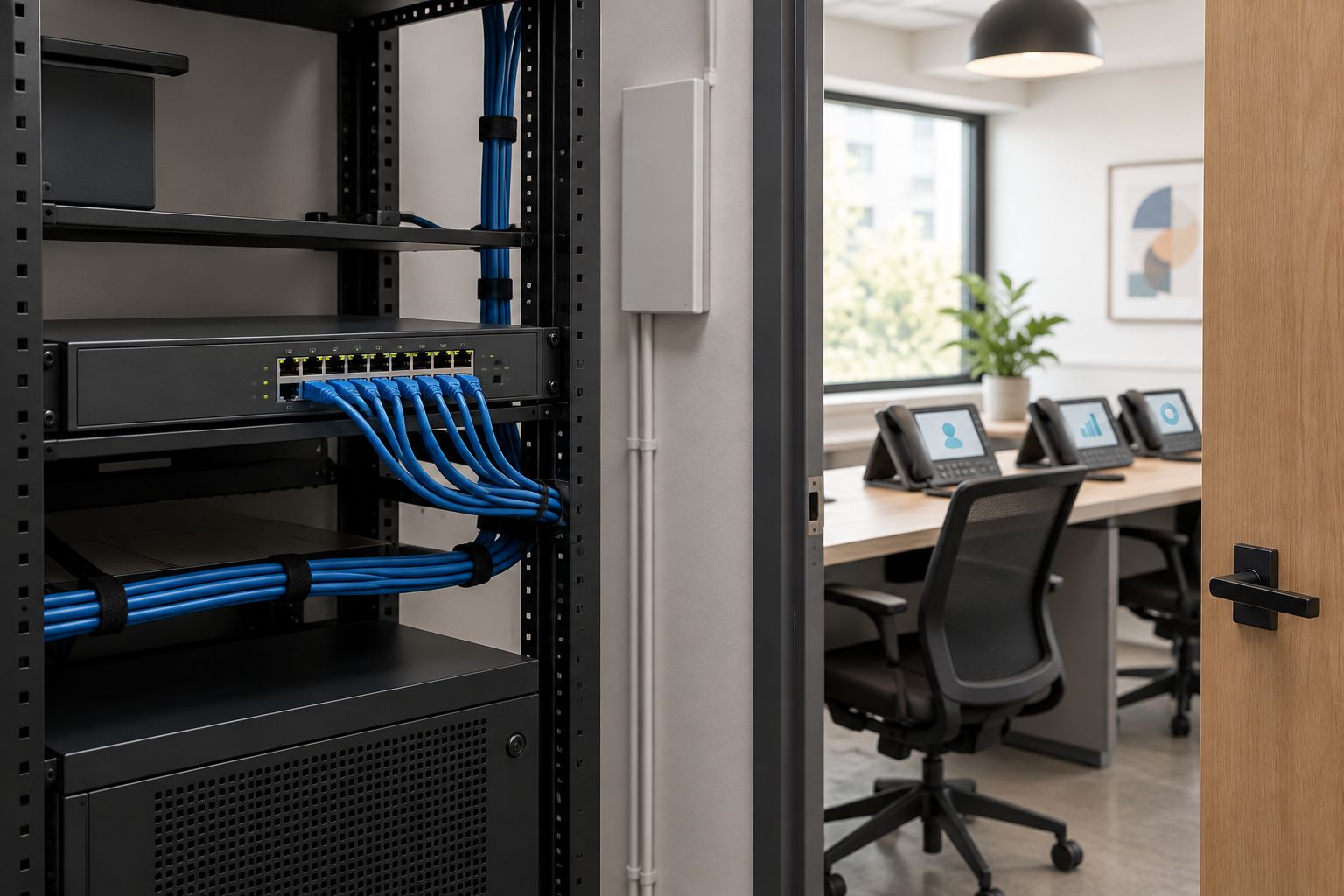
DBSI handles both sides of a VoIP switch for small businesses in the Fairfield, NJ area — the phone system itself and the structured cabling that keeps it reliable. A business that skips the cabling check and only buys phones tends to call back within the first month with quality complaints that have nothing to do with the phone hardware.
Find the right VoIP provider for your office
Compare features and network requirements before you commit.
Is a cloud-based phone system the same as VoIP?
Cloud-based phone systems are a type of VoIP — the call routing, voicemail, and management console live on a provider's servers instead of a box in your server room. Most VoIP systems sold to small businesses in 2026 are cloud-based by default, which is why the terms get used interchangeably in most sales conversations.
Does switching to VoIP save money for a small business?
Switching to VoIP typically lowers the recurring cost of adding lines and long-distance calling compared to a traditional PBX, because new extensions are added in software rather than with a technician visit and new copper. The savings show up over time as a business grows staff or locations, not necessarily in the first month.
Can a small business keep its phone numbers when switching to VoIP?
Most VoIP providers support number porting, so a small business keeps its existing phone numbers when switching from a landline. Porting timelines and requirements vary by carrier, so this gets confirmed with the provider before the old line is canceled.
FAQ
Is switching to VoIP worth it for a small business in 2026?
Switching to VoIP is worth it in 2026 for small businesses with remote staff, multiple locations, or frequent line changes, since VoIP adds and removes extensions in software instead of requiring new wiring.
What’s the biggest downside of switching to VoIP?
VoIP call quality depends on your internet connection and internal network, so an unstable connection or outdated cabling causes more dropped calls than a landline ever would.
Does VoIP work during an internet outage?
VoIP goes down when the internet connection goes down unless the business has a backup internet connection or failover routing in place; a traditional landline keeps working on copper power during most outages.
Is VoIP better than a landline for a small office?
VoIP is better than a landline for small offices that plan to add staff, support remote work, or use integrations like Microsoft Teams, while a landline still suits a single, fixed office with no growth plans.
How much network work does switching to VoIP require?
Switching to VoIP requires enough bandwidth for simultaneous calls, a switch with sufficient PoE capacity for desk phones, and cabling free of the drops or interference that cause jitter.
Can VoIP integrate with tools like Microsoft Teams or a CRM?
Most VoIP phone systems integrate with tools like Microsoft Teams, Slack, and CRM platforms, a feature traditional landline systems don’t offer.
Do all employees need a VoIP phone on their desk?
No — VoIP extensions work through a desk phone, a softphone app on a laptop, or a mobile app, so remote employees don’t need physical hardware to be reachable at their work number.
One last thing
The part that trips up most small businesses switching to VoIP in 2026 isn't the phone system — it's the network closet. A business with three-year-old switches and a Wi-Fi router meant for a coffee shop will feel every limitation of VoIP within the first week, and blame the phones. Get the cabling and switch capacity checked before signing a VoIP contract, not after the install crew leaves.
Related guides
- Is a cloud-based phone system worth it in 2026?
- Is managed IT support worth it for a small business in 2026?
Sorry, the comment form is closed at this time.